The American black bear is a conservation success story. Once heavily hunted, it has rebounded to become the most abundant bear species on the continent, with an estimated population exceeding 800,000 individuals across North America.
Quick Facts
Distribution & Habitat
American black bears range from northern Canada and Alaska south through much of the United States and into northern Mexico. They occupy a remarkable variety of forested habitats, from the boreal forests of Canada to the swamps of the southeastern United States and the mountain forests of the Sierra Nevada.
Unlike brown bears, black bears are highly associated with dense forest cover and tend to avoid large open areas. They are excellent climbers and regularly ascend trees to feed, escape threats, or simply rest. This arboreal ability distinguishes them from their larger brown bear relatives.
Physical Characteristics
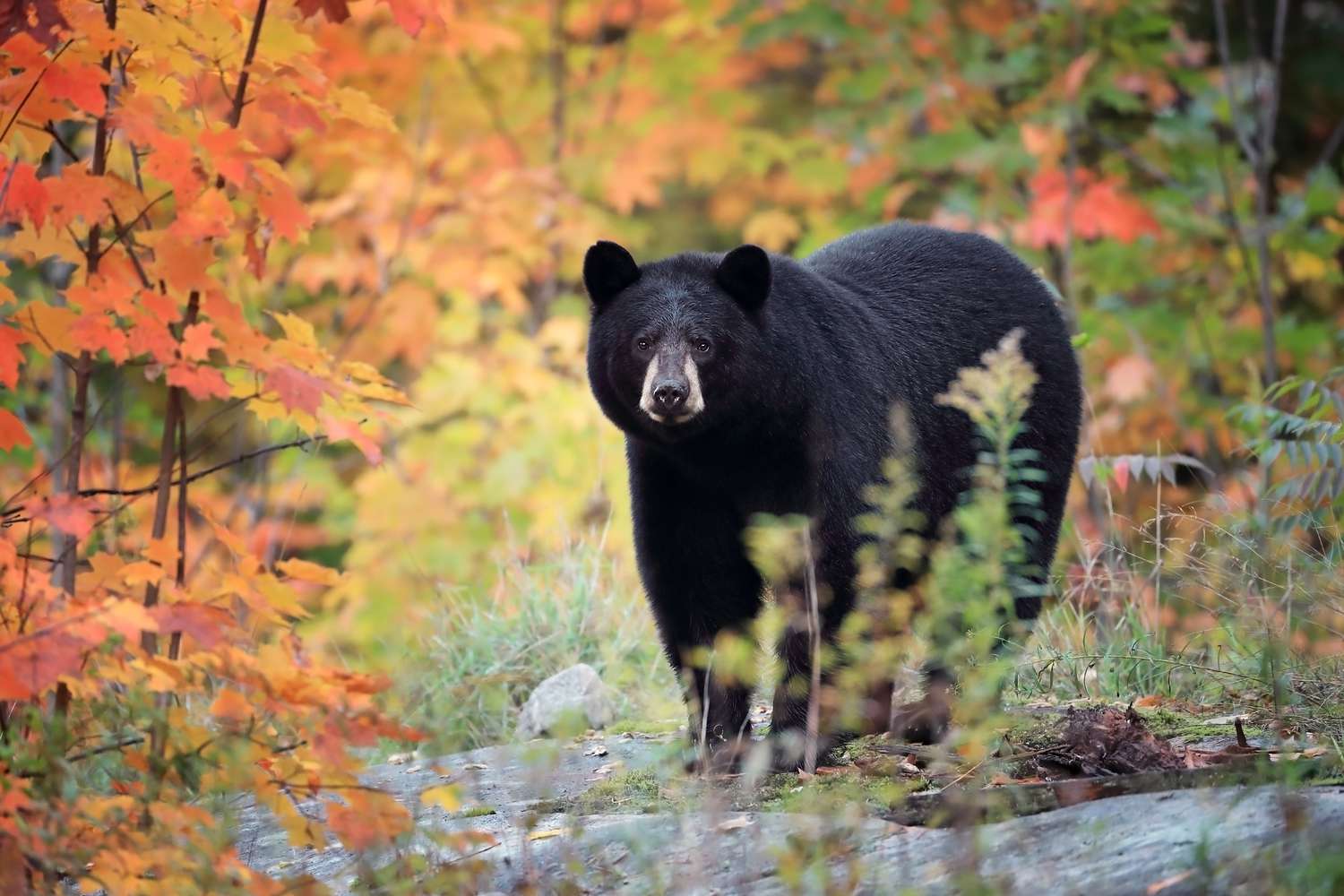
Despite their name, American black bears display considerable color variation. While most individuals are black, particularly in the eastern portion of their range, western populations frequently exhibit brown, cinnamon, and blonde fur. A rare color phase known as the Kermode or "spirit bear" produces white-furred individuals among certain populations in British Columbia.
Black bears are smaller than brown bears and lack the prominent shoulder hump. Their faces tend to have a straighter profile compared to the dished face of a brown bear. Adult males typically weigh between 115 and 270 kilograms, though exceptional individuals exceeding 400 kilograms have been recorded.
Diet & Foraging
Black bears are opportunistic feeders with an extremely varied diet. Plant material constitutes roughly 85 percent of their food intake, including berries, nuts, grasses, and roots. They supplement this with insects — particularly ants and beetle larvae — as well as small mammals, fish, and carrion.
In areas near human settlements, black bears are notorious for seeking out anthropogenic food sources such as garbage, bird feeders, and pet food. This behavior creates management challenges and underscores the importance of bear-proofing communities within bear habitat.
Hibernation
American black bears are among the most well-studied hibernators. During winter months, they enter dens — which may be hollow trees, excavated hillsides, or spaces beneath fallen logs — and enter a state of torpor characterized by reduced heart rate, body temperature, and metabolic activity.
Remarkably, bears do not eat, drink, urinate, or defecate during hibernation, which can last five to seven months in northern populations. Pregnant females give birth and nurse their cubs during this period, relying entirely on accumulated fat reserves. Research into bear hibernation physiology has informed human medical science, particularly regarding bone density loss and kidney function.
Behavior & Reproduction
Black bears are generally shy and non-confrontational. When encountering humans, their typical response is to flee. However, bears habituated to human food can become bold and potentially dangerous.
Female black bears reach sexual maturity at three to four years of age and typically produce litters of one to four cubs every two years. Like other bears, they exhibit delayed implantation: eggs fertilized in summer do not implant until late autumn. Cubs are born in the den during winter and emerge with their mother in spring.
Conservation
The American black bear is classified as Least Concern by the IUCN and represents one of North America's great wildlife management successes. After significant population declines due to unregulated hunting in the 19th and early 20th centuries, strict management regulations allowed populations to recover and expand.
Today, the primary conservation challenges involve managing human-bear conflicts in suburban and exurban areas where development encroaches on bear habitat. Education programs promoting proper food storage, bear-resistant containers, and behavioral awareness have proven effective in reducing negative encounters.