The brown bear is the most widely distributed bear species in the world, with populations spanning three continents. From the Eurasian steppes to the salmon-rich rivers of Alaska, brown bears have adapted to an extraordinary range of environments.
Quick Facts
Distribution & Habitat
Brown bears occupy one of the largest geographic ranges of any bear species. They can be found across North America — from Alaska through western Canada and into the northwestern United States — as well as throughout northern Europe and Asia. Significant populations exist in Russia, Scandinavia, the Carpathian Mountains, and parts of the Middle East and Central Asia.
They are highly adaptable and thrive in diverse habitats including dense boreal forests, open alpine meadows, Arctic tundra, and coastal regions. In North America, brown bears living along the coast tend to grow significantly larger than their inland counterparts due to access to protein-rich salmon.
Physical Characteristics
Brown bears vary enormously in size depending on their subspecies and geographic location. Coastal brown bears in Alaska, sometimes referred to as Kodiak bears when on Kodiak Island, can weigh over 600 kilograms. Inland populations are typically smaller, averaging 200 to 300 kilograms for adult males.
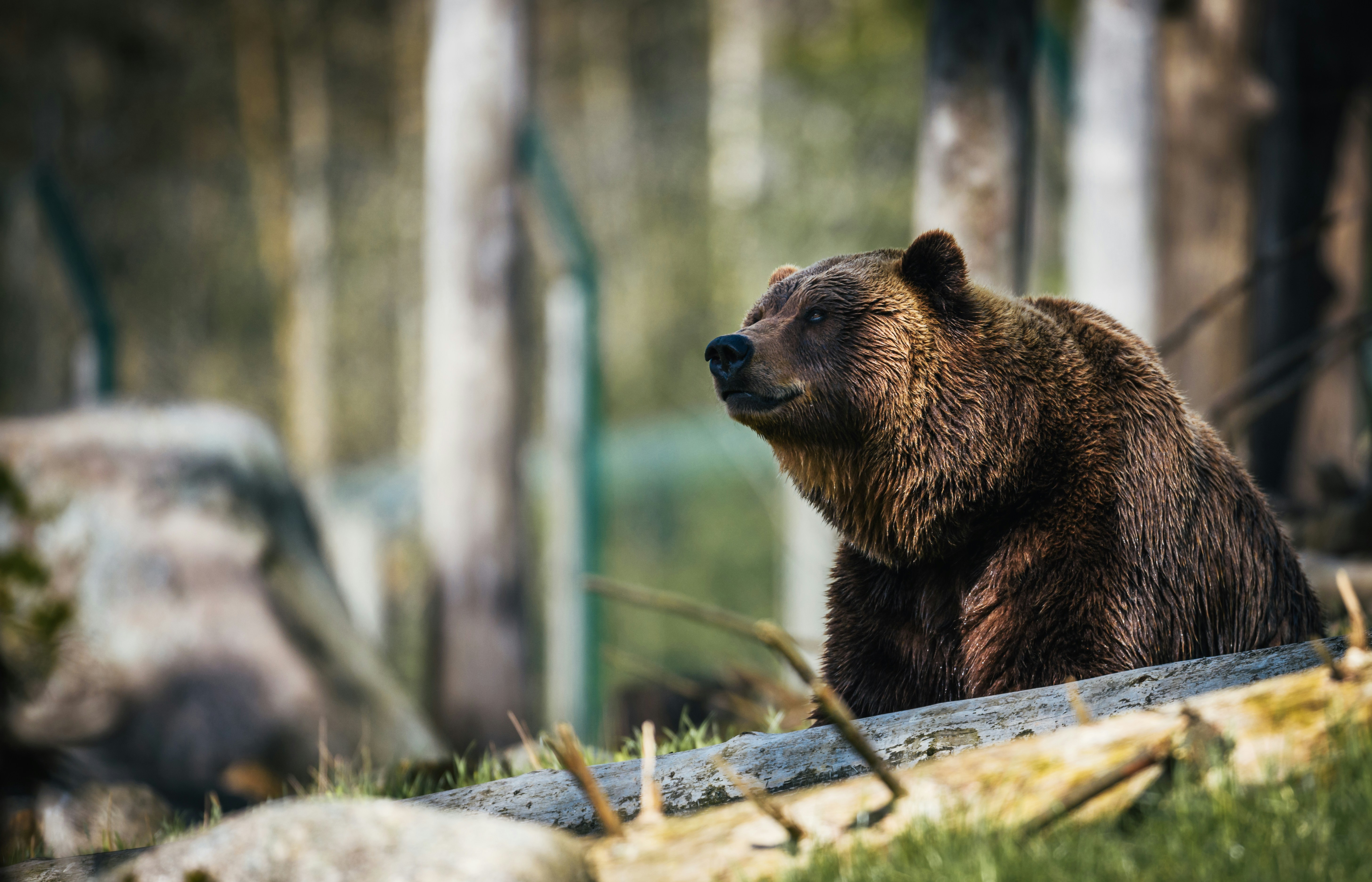
Their fur ranges from light cream to almost black, with the most common shades being medium to dark brown. One of the brown bear's most recognizable features is a pronounced muscular hump above the shoulders, which powers their forelimbs for digging and is absent in black bears.
Diet & Foraging
Brown bears are true omnivores. Their diet shifts seasonally and includes grasses, roots, berries, insects, fish, and occasionally large mammals such as elk calves or moose. In regions with access to spawning salmon, bears congregate at rivers in late summer and autumn, consuming enormous quantities of fish to build fat reserves before hibernation.
A single bear may consume 40 kilograms of food per day during the pre-hibernation feeding period known as hyperphagia. This intense feeding behavior allows them to accumulate the fat necessary to survive months of dormancy.
Behavior & Reproduction
Brown bears are generally solitary animals, though they may tolerate each other at concentrated food sources such as salmon streams. Mothers with cubs are particularly cautious and can be aggressive if they perceive a threat.
Mating occurs in late spring or early summer, but through a process called delayed implantation, the fertilized egg does not attach to the uterine wall until autumn. Cubs — usually two or three — are born during the winter hibernation period and weigh less than 500 grams at birth. They remain with their mother for two to three years.
Conservation
The brown bear is classified as Least Concern by the IUCN, though this global assessment masks significant regional variation. Populations in Western Europe were dramatically reduced over centuries and remain small and fragmented in countries like Spain, France, and Italy. In contrast, populations in Russia, Alaska, and Canada remain robust.
Conservation efforts in Europe have focused on habitat corridors and reducing human-bear conflicts through education, proper waste management, and electric fencing around livestock. Reintroduction programs have had mixed success but represent a growing commitment to coexisting with these animals.